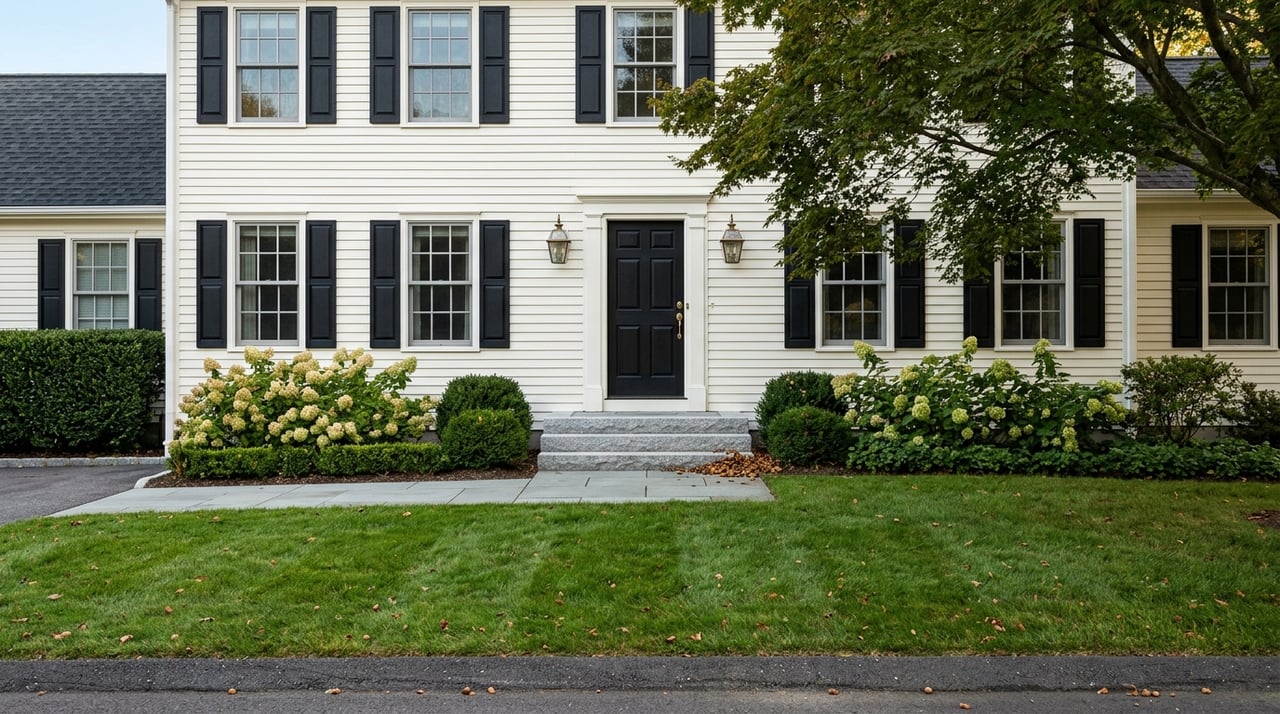
Natick First Suburban Home Tips for Buyers Leaving Boston
July 23, 2026
July 23, 2026
Thinking about trading your Boston apartment for a first home in Natick? You are not alone, and the appeal is easy to understand. Natick offers a different kind of daily rhythm, with commuter rail access, a defined town center, more residential pockets, and outdoor amenities that can make suburban life feel more connected than isolated. If you are trying to figure out whether Natick fits your budget, commute, and lifestyle, this guide will help you focus on the choices that matter most. Let’s dive in.
Natick is a midsize town in Middlesex County with 37,006 residents and a median household income of $138,538 based on 2020 to 2024 Census data. For many Boston buyers, that places Natick in a sweet spot. It feels suburban, but it is still tied into regional transit and everyday convenience in ways that matter when you are used to city access.
The town is served by the MBTA commuter rail, MWRTA, and Logan Express. On the Framingham/Worcester Line, you can use both Natick Center and West Natick stations. Natick’s transit network is one of the clearest reasons it remains attractive to first-time suburban buyers who want more space without giving up connection to Boston and nearby job centers.
Moving to Natick is not just about getting a yard or an extra bedroom. It is really about choosing how you want your day-to-day life to work. In Natick, your experience can vary quite a bit depending on whether you want walkability, train access, or a quieter residential setting farther from the rail line.
That tradeoff is one of the biggest differences from city living. In Boston, many errands and transit options may be clustered tightly together. In Natick, you are more often choosing a lifestyle lane: town-center convenience, station-area practicality, or a more car-oriented residential pattern.
If you want the closest thing to a small downtown, Natick Center is the place to start. Town planning materials describe it as a bustling core with retail, commercial, cultural, residential, and civic uses. For a first-time buyer coming from Boston, that mix can feel familiar in the best way.
Natick Center also works well if you want rail access to be part of the same decision as restaurants, services, and community activity. The station has recently completed accessibility improvements, with both platforms reopened and access available via Main Street and Washington Street. If your goal is a car-light routine, this area deserves serious attention.
West Natick is another key area for buyers focused on commuting. It gives you access to a second Framingham/Worcester Line station, and both Natick stations sit in fare zone 4. Depending on the specific home and your priorities, West Natick may offer a practical train strategy without putting all your lifestyle choices into the town-center setting.
It is also an area to watch because the town lists MBTA Communities planning work in West Natick. That effort is intended to support diverse, mixed-use village centers near transit stations. For buyers, that means it is wise to look beyond the house itself and understand what future change nearby could mean for traffic, streetscape, and neighborhood pattern.
If your idea of suburban life leans more residential and less commuter-hub centered, South Natick offers a different appeal. It has the town’s strongest historic identity, with the John Eliot Historic District covering much of the center and the Henry Wilson Historic District stretching along West Central Street. That makes it a useful contrast to Natick Center.
For some buyers, this setting may feel more rooted and quieter. It is less about having a downtown-and-train package at your doorstep and more about a distinct residential character. If you are comfortable relying more on a car for parts of your routine, this may be a better fit.
The Route 9 and Golden Triangle area is better understood as a major retail and employment corridor than a classic neighborhood. Town planning documents describe it as a large mixed-use district, and the Natick Mall area is one of the town’s key economic centers. That matters if shopping access and regional road connections are high on your list.
This part of Natick can be convenient in very practical ways. Still, if you are searching for a traditional neighborhood feel, you will want to weigh that convenience against the setting and traffic patterns that come with a regional commercial area.
For many former Boston renters, commute planning is where the suburban decision becomes real. Natick Center and West Natick are both on the Framingham/Worcester Line, and the town notes access to destinations including South Station, Back Bay, and Lansdowne. That gives you a direct framework for comparing home location with your work routine.
Natick also has MWRTA routes and shuttles that connect to nearby job centers and transit hubs, and the town says MWRTA service is currently fare free. That can be helpful if you want to reduce driving for at least part of your routine. The best approach is to map out not just your train ride, but also how you will get to the station on an average weekday.
A suburban move works best when your life gets bigger, not just farther out. Natick gives you a meaningful set of local amenities that can shape your routine beyond work. The town has 30 parks and more than 400 acres of protected land under conservation care.
For outdoor time, the 3.7-mile Cochituate Rail Trail and the 1.5-mile Eisenmenger/Takawambpait Trail are notable assets. Memorial Beach at Dug Pond is the town’s public swimming location. These are the kinds of features that can make weekends and after-work time feel more flexible than they did in the city.
Community activity also adds to the draw. Natick Center hosts events through Natick Center Associates, including Natick Nights, Multicultural Day, and the farmers market. If you are hoping for a suburb with an active public life rather than a purely residential one, that matters.
The home price is only part of the monthly picture, especially in a town like Natick. The FY26 residential tax rate is $12.17 per $1,000 of assessed value. That means property taxes should be part of your budget from the start, not something you estimate at the very end.
The town’s FY26 figures show a median single-family assessed value of $838,600 and an average of $937,795. That works out to about $10,206 per year for the median home and about $11,413 per year for the average home. On a monthly basis, that is roughly $850 to $951 before you add mortgage, insurance, utilities, and maintenance.
Natick real estate tax bills are due quarterly on August 1, November 1, February 1, and May 1. If you are buying your first suburban home, that timing is worth understanding early. Even when taxes are escrowed into your mortgage payment, it helps to know how the town’s billing cycle works.
Natick remains a competitive suburban market, and that has real implications for your search strategy. According to the Massachusetts Association of Realtors’ April 2026 year-to-date single-family report, Natick had 41 homes for sale, 1.6 months of supply, a median sales price of $1.06 million, 48 cumulative days on market, and 100.6% of original list price received. In plain English, that points to limited inventory and strong competition for well-located homes.
You may also see different price figures from different market trackers. Zillow reported a $835,500 median sale price as of May 31, 2026, Redfin reported an $872,000 median sale price for the three months ending May 2026, and Realtor.com reported a $1.0 million median listing price in June 2026. These are best understood as different snapshots using different methods, not as directly matching numbers.
The bigger takeaway is simple. If a home is well located, priced reasonably, and aligns with what Boston-to-suburb buyers want, you should be prepared to move quickly. That does not mean rushing blindly, but it does mean getting clear on your budget, priorities, and must-haves before the right listing appears.
First-time suburban buyers often benefit from narrowing their search around daily routine before style details. Start with the questions that affect your life every week:
This kind of clarity helps you compare Natick Center, West Natick, South Natick, and the Route 9 corridor in a way that reflects real life. It also helps you avoid stretching for a home that looks right on paper but does not work as well in practice.
Natick is not standing still, and that is important when you are buying. Town project pages show ongoing Main Street improvements in Natick Center and MBTA Communities planning in West Natick. Those changes may be positive over time, but they can still affect access, noise, construction timing, and the feel of an area in the near term.
Before you commit to a closing date, check whether the home is near active or planned work. This is especially important if station access, walkability, or street conditions are central to why you like the property. A smart first purchase is not just about the house today. It is also about understanding the location as it continues to evolve.
Buying your first suburban home after Boston is a meaningful shift, and Natick offers several ways to make that shift work well. You can prioritize walkability in Natick Center, train access in West Natick, a more historic residential feel in South Natick, or regional convenience near Route 9. The key is matching the right part of town to the routine and budget you actually want.
When you approach Natick with clear priorities and good local guidance, the move feels much more manageable. If you are weighing your options in Natick or nearby Metrowest towns, Beyond Boston Properties can help you build a focused plan around commute, lifestyle, and long-term value.
Stay up to date on the latest real estate trends.
Contact us today to discover how the power of three can elevate your home buying and selling experience in the towns and communities of Greater Boston.