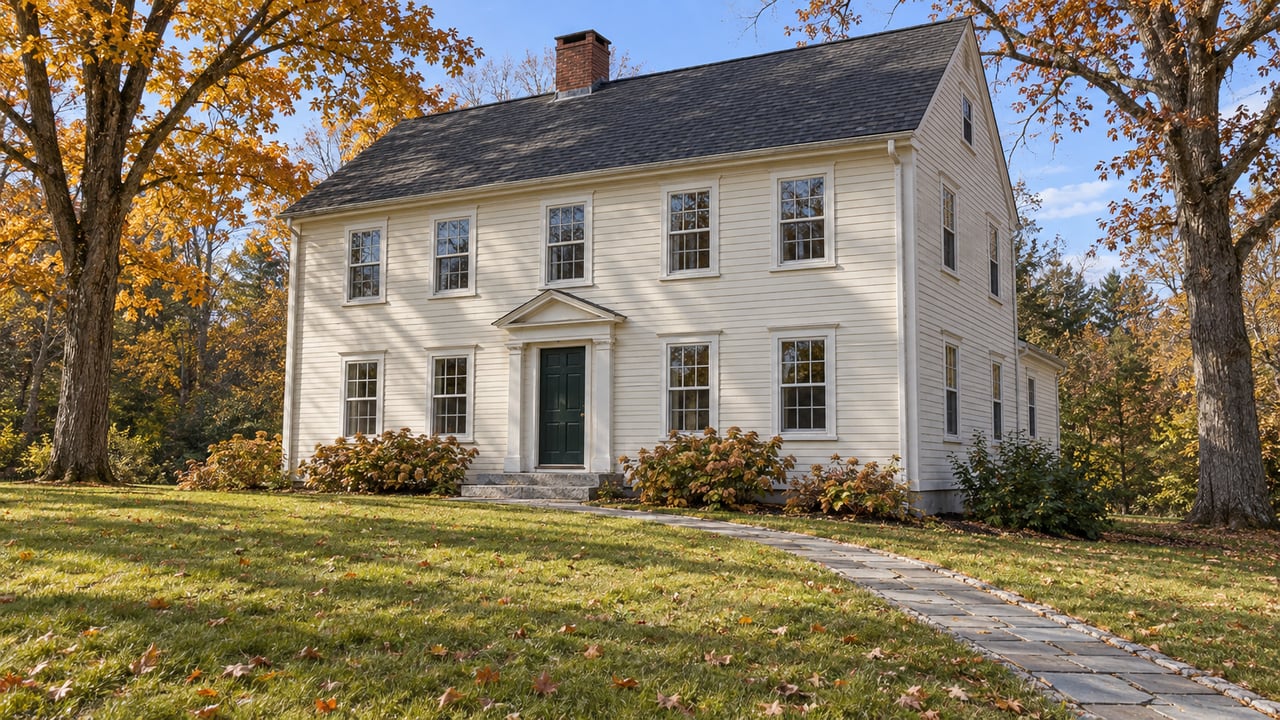
Sudbury Is Rewriting Its Septic Rules. What the Draft Means for Teardowns, Sales, and New Builds
November 5, 2026
November 5, 2026
"A new septic system must be designed and installed in its entirety for all new construction projects in which the existing structure is completely demolished or removed even if there is no increase in flow." That sentence comes from a draft regulation the Sudbury Board of Health posted on October 20, 2026. It is aimed at the moment after a sale, when someone takes down the old house. In a town where every home runs on private septic, that moment is where much of the value in an older property sits.
The draft Rules and Regulations Governing Onsite Wastewater Treatment and Disposal Systems would supplement the state's Title 5 code. Its preamble says the rules are "to become January 1, 2027." At the board's October 21 meeting, a staff member said the current local rules "have been unchanged since 1998," according to MeetingWatch's AI-generated meeting summary. So for anyone pricing a Sudbury lot to rebuild on, or selling an older house to a builder, the septic question is moving. It used to be "will it pass?" Under the draft, it is closer to "what will the replacement cost, and what will this soil allow?"
Under state Title 5, a change in a building's footprint that adds no flow only requires an inspection to locate system components and the reserve area. If official records already show where they are, no inspection is needed. Sudbury's draft goes much further for rebuilds. Section III.D says the full-replacement requirement "shall also apply to projects where substantial demolition has occurred or where the existing foundation is to remain."
That last phrase closes a familiar workaround. Keeping the old foundation and rebuilding above it would not, by itself, keep the existing system in service. There is one exception. The Director of Public Health "may allow septic systems to remain if the system was installed within 5 years of demolition and passes a Title 5 inspection."
For a builder or a buyer planning a rebuild, a recent passing inspection on a 20-year-old system would count for little under that wording. The cost of a new system lands on whoever rebuilds. How large that cost is depends on what the draft says about soil and location.
Several draft provisions point the same way. They tie the cost of a new system to the conditions on the specific lot:
The Zone II line matters most for location. Title 5 already treats Zone II areas around public water supplies as nitrogen-sensitive and caps new-construction loading at 440 gallons per day per acre, with specified exceptions. The state's blanket nitrogen-reduction requirement, though, applies to a different category of sensitive area. Requiring denitrification on every new Zone II system would be Sudbury's own tightening. The town's Phase 1/1A wastewater page already names septic systems near the municipal water-supply wells on Raymond Road as an environmental concern. MeetingWatch's summary describes the Zone II denitrification requirement as intended to protect drinking water.
The variance section would also limit the usual way out. Variances would be granted only to protect public health, and "neither financial hardship nor past practices are adequate reasons."
| Topic | State Title 5 | Sudbury draft |
|---|---|---|
| Rebuild with no added flow | Footprint change triggers an inspection to locate components | Full new system for complete or substantial demolition, even if the foundation stays |
| Zone II | Nitrogen-sensitive; 440 gpd/acre loading cap for new construction | Denitrification on every new system |
| I/A systems | State-approved for general, remedial, pilot or provisional use | Conventional preferred; site-limiting feature needed for size or offset benefits |
| Variances | Manifest injustice plus equivalent protection, with abutter notice | Public-health test; hardship and past practice excluded |
| Plans | Per state requirements | CAD only, PE or RS stamp where required, electronic as-built |
The draft would also require that all new components be rated for H-20 loading. Abandoning an old tank would need a permit and an inspector on site, and the engineer or sanitarian who designs a system could not also install it.
For a seller who is keeping the house as it is and simply selling, the draft changes little at closing. The state rules in 310 CMR 15.301 still set the sequence, and they have direct consequences for a winter listing:
The filing fee stays the same. The proposed 2026 fee schedule keeps Title 5 report filing at $25, soil testing at $250, a residential repair with no added flow at $300, and residential new construction with increased flow at $750. Those are the same amounts as the April 2024 schedule. MeetingWatch reports that the board unanimously approved the fee schedule to take effect January 1, 2027. The permit fees stay small. The engineering and construction that the regulations would require are where the money goes.
Sudbury's long-planned sewer covers the core Route 20 corridor and Raymond Road South. The town's project page shows a tentative schedule with construction in 2027 to 2029 and sewers online in 2029, and notes that those milestones may change with permitting, approvals and funding. The town's FAQ describes the Route 20 phase as non-residential, and only part of the Raymond Road neighborhood is included. The town's tentative schedule called for a possible design article at the 2025 Annual Town Meeting and a construction article in 2026. Neither appeared on the 2026 Annual Town Meeting warrant. In the Select Board's August 11 meeting materials, the chair's July 2026 review listed "finalizing recommendations for the Route 20 Sewer Project" as critical work still ahead. The town's wastewater plan proposes that areas outside the sewer-needs zones stay on onsite systems. That covers nearly every residential street, so the local septic rules are the ones that will price residential rebuilds for years to come.
The October 21 agenda listed the item as "Draft Review of Revised Sudbury Septic Regulations." In the posted text, the "Adoption and Date Effect" section is only a heading with nothing under it. MeetingWatch reports the board planned a Zoom feedback session for engineers and installers in early November, because the changes could affect the cost and complexity of installations. The draft's provisions are proposals, and the wording could change before the board adopts anything. Agendas and attachments are posted on the Board of Health meeting page.
Does the draft change what happens when I sell a house I am not renovating? Not in its posted text. The inspection at sale is still governed by state Title 5, and the draft's new requirements apply to permits, new systems, demolition projects and plan submissions.
Is there state help if a system fails? The Massachusetts Title 5 tax credit is 40 percent of up to $15,000 in qualifying costs, with a $6,000 lifetime maximum per property. It is limited to $1,500 per tax year, with the excess carried forward over the next three years, and it applies to an owner-occupied principal residence. Separately, the state's Community Septic Management Program lends to participating communities, which then make betterment loans to homeowners.
How close can an addition be to my system? Sudbury's Health Department FAQ lists 10 feet from the tank and 20 feet from the leaching area for a full foundation, and 10 feet from each for a slab. Deck columns must be 5 feet from the leaching area.
This post is general information, not legal, tax or financial advice. Confirm how any rule applies to your property with a licensed engineer or sanitarian, an attorney, or a tax professional.
Beyond Boston Properties can help you collect your inspection and pumping records, factor the draft rules into a pricing plan, and present the lot accurately to buyers. Request a Personalized Home Valuation to start that conversation.
Stay up to date on the latest real estate trends.
Contact us today to discover how the power of three can elevate your home buying and selling experience in the towns and communities of Greater Boston.