Staging Older Needham Homes To Attract Today’s Buyers
July 9, 2026
July 9, 2026
If you are selling an older home in Needham, you may be wondering how to compete with polished new construction and fully renovated listings. That is a fair concern in a market where many buyers start online and form quick opinions from photos alone. The good news is that staging is not about disguising your home’s age. It is about helping buyers see its layout, care, and everyday livability. Let’s dive in.
Needham has a large share of older homes, and that is part of what gives the town its established character. Current housing estimates show that about 26% of units were built before 1939, 29.8% were built in 1940 to 1959, and 20.1% were built in 1960 to 1979. Needham’s housing plan also notes that 77.6% of units are single-family detached, so many sellers are working with classic suburban homes rather than newer attached housing.
That local housing mix matters when you prepare a home for market. Needham planning materials describe pre-1970s capes, split-levels, and colonials as common local home types. Older layouts can feel smaller or more segmented than newer homes, so staging helps buyers focus on function, light, and flow instead of comparing square footage alone.
The market also remains competitive. In March 2026, Needham had 40 single-family listings and 1.9 months of supply, with year-to-date sellers receiving 96.6% of original list price and a median sale price of $2.419 million. In that environment, presentation still matters because buyers have high expectations, especially at premium price points.
Today’s buyers are highly visual, and their expectations are shaped by online listings. In the National Association of Realtors 2025 staging survey, 83% of buyers’ agents said staging makes it easier for buyers to visualize a property as a future home. Nearly half also said buyers expect homes to look like TV-staged spaces.
That gap between expectation and reality can work against older homes if they are not prepared well. The same survey found that 58% of buyers’ agents said buyers are often disappointed when a home does not match the polished image they had in mind. For many sellers, that means staging is less about adding luxury and more about removing friction.
It also helps to keep expectations realistic. Staging should be viewed as a marketing tool, not a guaranteed price booster. In the same survey, 41% of buyers’ agents said staging had no impact on dollar value offered, while 17% said it increased offers by 1% to 5%, which reinforces the idea that the main benefit is better perception and fewer objections.
For older Needham homes, the smartest strategy is usually selective preparation, not a broad pre-sale remodel. Needham’s housing plan shows a clear size gap between older and newer homes, with a sample of newer homes averaging 4,461 square feet compared with 2,235 square feet in an older sample. That makes it even more important to present your existing space in the best possible light.
The strongest pre-listing improvements are often the simplest ones. NAR survey respondents most often recommended decluttering, deep cleaning, curb appeal improvements, paint touch-ups, minor repairs, and depersonalizing the home. Those steps support a cleaner visual impression without overspending on updates you may not fully recover.
A well-staged older home should not try to look brand new if it is not. Instead, the goal is to make its age feel intentional, its rooms feel larger, and its condition feel well maintained. That approach tends to fit Needham’s housing stock far better than over-renovating for the sake of trend appeal.
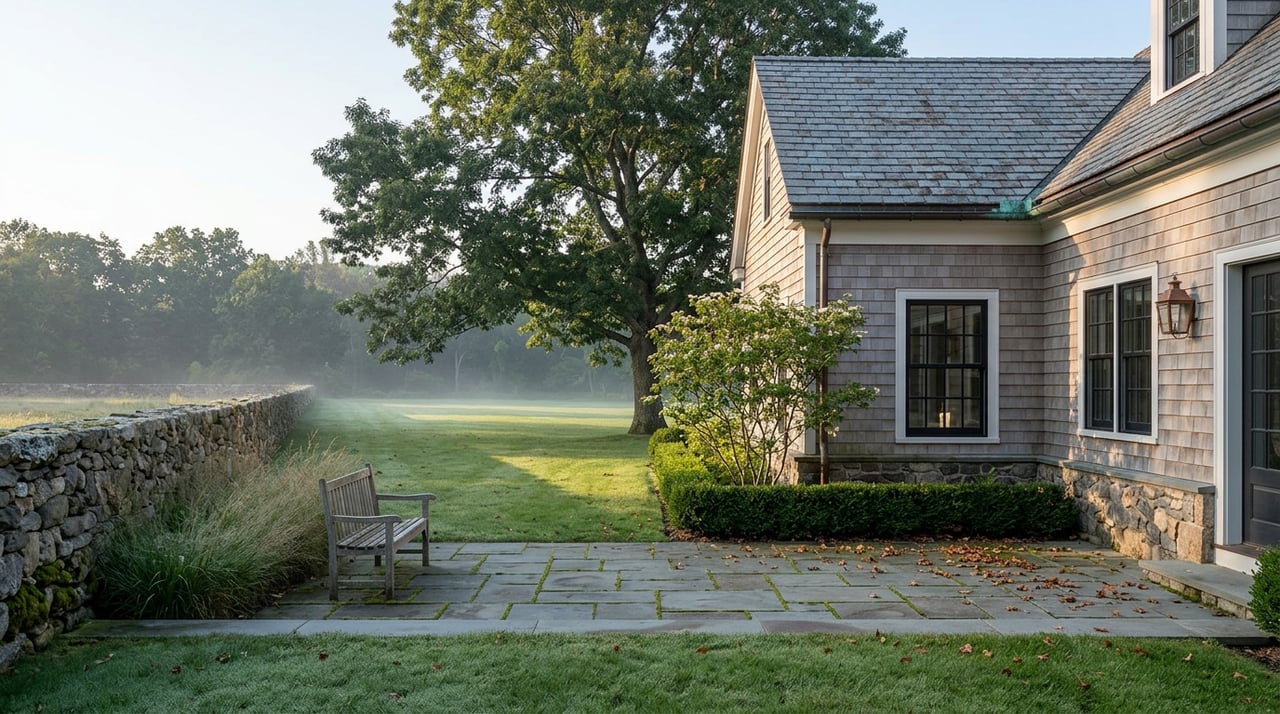
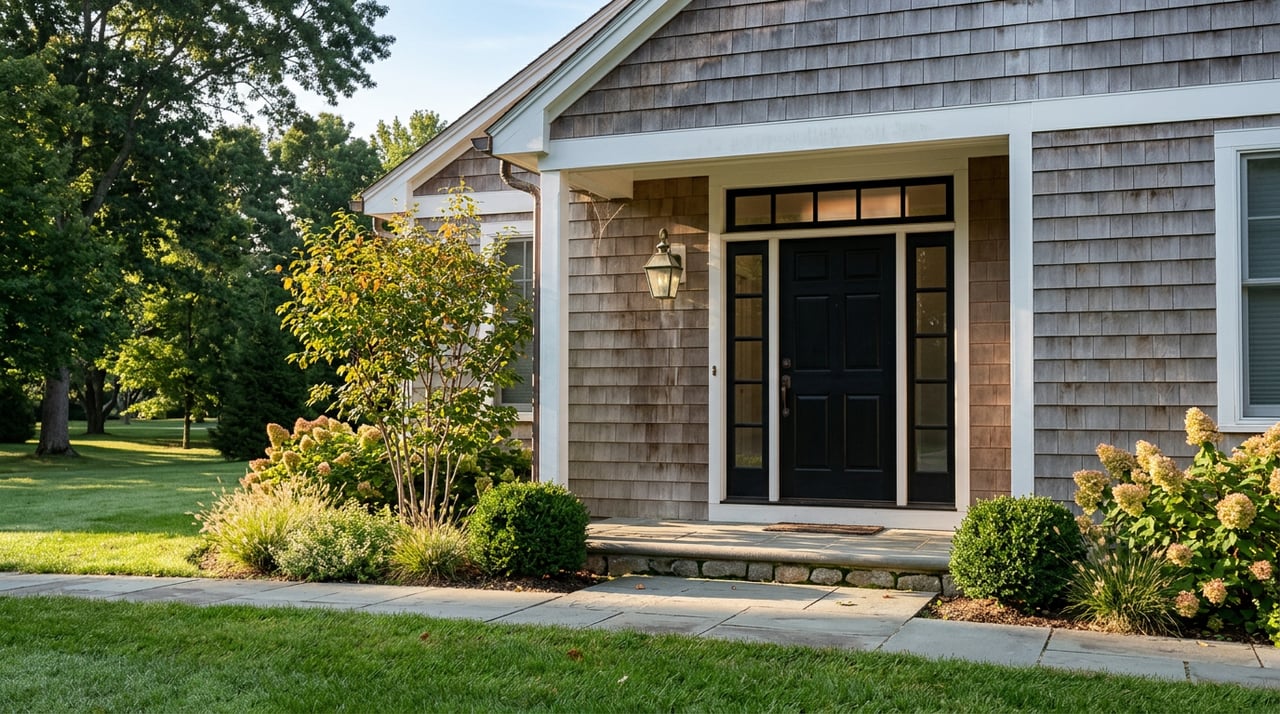
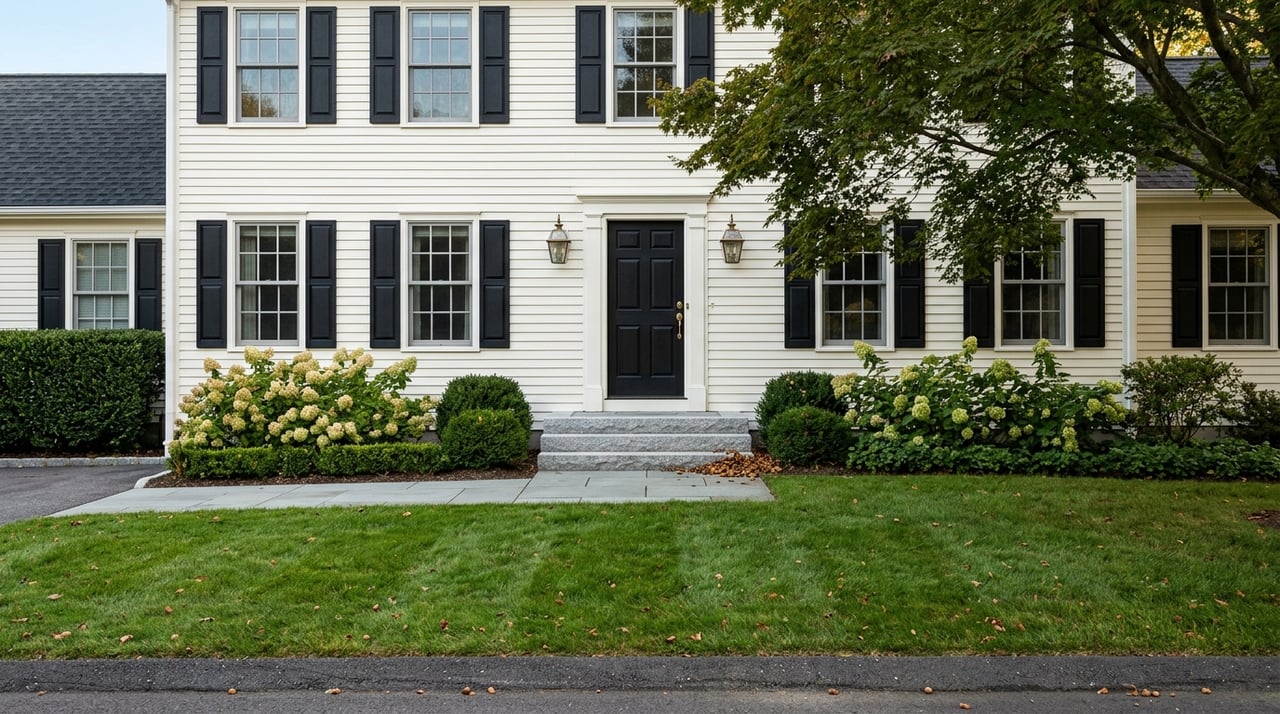
First impressions begin before buyers walk through the front door. Because curb appeal is one of the top seller recommendations in NAR’s survey, it makes sense to start outside. For many Needham capes and colonials, that means focusing on the front walk, steps, door, lighting, shrubs, and doormat.
You do not need a major exterior project to make an impact. A tidy entry, clean surfaces, fresh bulbs, and trimmed landscaping can make an older home feel cared for right away. Buyers often read exterior upkeep as a signal of how the rest of the home has been maintained.
The living room is the most important room to stage, according to NAR. That is especially relevant in older Needham homes where formal rooms, fireplaces, and traditional layouts are common. If the room feels crowded, buyers may assume the whole house is smaller than it really is.
Start by removing extra furniture and anything that blocks natural pathways. The goal is to show clear circulation and allow the room’s proportions to read well in person and in photos. In many homes, one well-scaled seating arrangement works better than several small pieces trying to fill every corner.
If your home has strong architectural details like trim, mantels, or warm wood floors, let those elements lead. A simpler furniture plan helps buyers notice character instead of distraction. This is where thoughtful staging can make an older room feel timeless rather than dated.
Buyers notice kitchens quickly, but they do not always need a full renovation to respond positively. In an older home, cleanliness and maintenance often matter more than trying to force a major upgrade before sale. Fresh paint touch-ups, cleaned grout, and clear counters can go a long way.
If your kitchen is compact, reduce visual noise wherever possible. Store small appliances, clear paperwork, and limit countertop items to a few practical accents. Buyers tend to respond better when the room feels functional and easy to maintain.
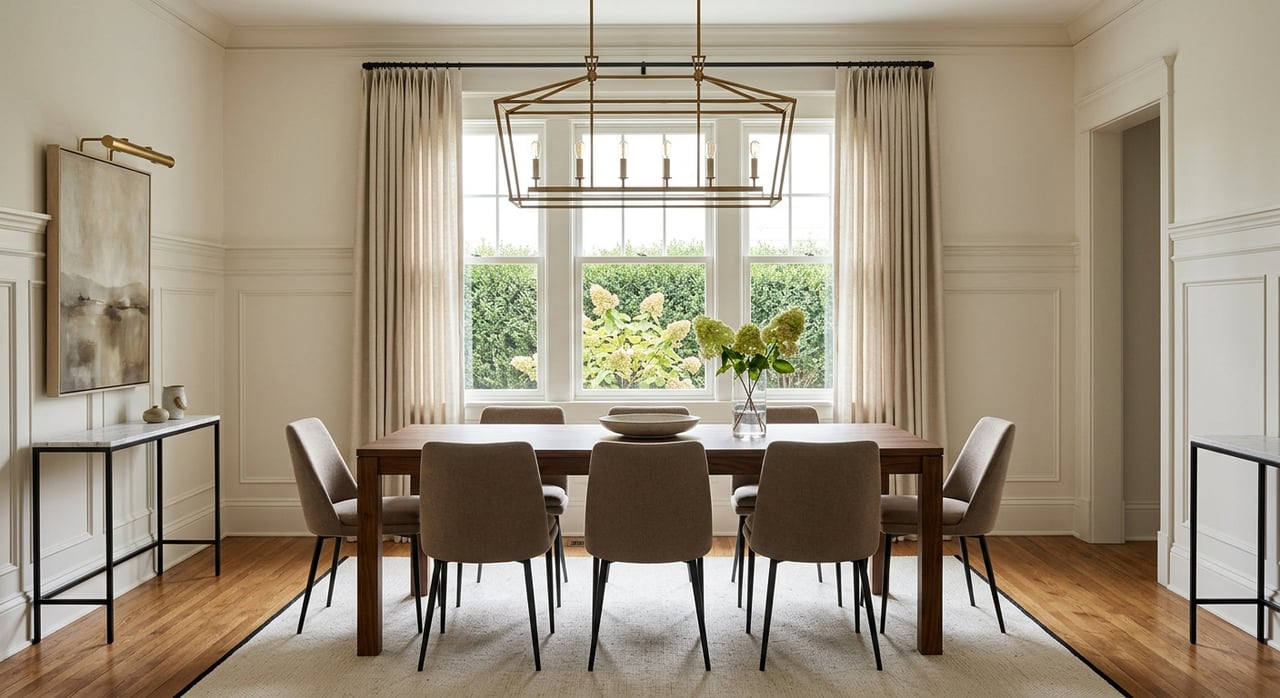
The same idea applies to adjacent dining areas. A simple table setting and open circulation can help buyers understand how the rooms work together. In older homes with more defined spaces, that sense of flow is important.
Bathrooms are another place where small improvements can have an outsized effect. You do not need to gut a bath to improve its presentation. NAR’s prep recommendations support lower-cost updates like deep cleaning, minor repairs, paint touch-ups, and coordinated linens.
In practice, that may mean cleaning grout, replacing worn caulk, tightening hardware, and using fresh white or neutral towels. Remove personal care products and keep counters as clear as possible. Buyers are looking for signs that the home has been cared for, even if every finish is not newly installed.
Needham’s housing plan notes that many homes are larger than the households living in them. That can create opportunity, but only if buyers understand how to use the extra rooms. Spare bedrooms, lower-level spaces, and home offices should each have a clear purpose.
A guest room should read as a guest room. An office should read as a functional workspace. A finished lower level should feel like usable living area rather than storage overflow.
This matters because undefined space often feels like wasted space. Clear function helps buyers connect the home’s layout to their own daily routines.
Most buyers will meet your home online before they ever step inside. NAR survey results show that photos are among the most important listing assets for both buyer agents and seller agents. That makes staging for photography just as important as staging for showings.
Professional photography should come after cleaning and staging, not before. The goal is to capture the home at its best, when light, scale, and room flow are easiest to see. For older Needham homes, this is especially important because strong photos can help a traditional layout feel bright, polished, and move-in ready.
A useful photo sequence is simple:
That order highlights the rooms buyers care about most and helps the listing tell a clear story. It says the home may be older, but it is welcoming, usable, and well presented.
Virtual staging can help if a room is vacant or hard to interpret, but it works best as a supplement. NAR found that physical staging and photos ranked above virtual staging, and 34% of sellers’ agents said virtual staging was less important to clients. In other words, digital help does not replace real-world preparation.
If a room needs virtual staging to show furniture placement, make sure the actual space is still clean, repaired, and photo ready. Buyers will eventually visit in person, so the home still needs to support the online impression. The strongest listings use virtual tools carefully and rely on genuine presentation first.
If you want a practical way to approach pre-sale preparation, keep your checklist focused:
This kind of plan respects both budget and market reality. In Needham, where older homes often compete against larger new builds, the goal is not to mimic new construction. It is to present your home as cared for, functional, and appealing from the first photo to the final showing.
When you are preparing a long-held home for sale, small decisions can shape the entire buyer impression. A focused staging strategy helps your home feel current without losing the character that makes it yours. If you are thinking about selling in Needham, Beyond Boston Properties can help you build a thoughtful, market-ready plan.
Stay up to date on the latest real estate trends.

Contact us today to discover how the power of three can elevate your home buying and selling experience in the towns and communities of Greater Boston.