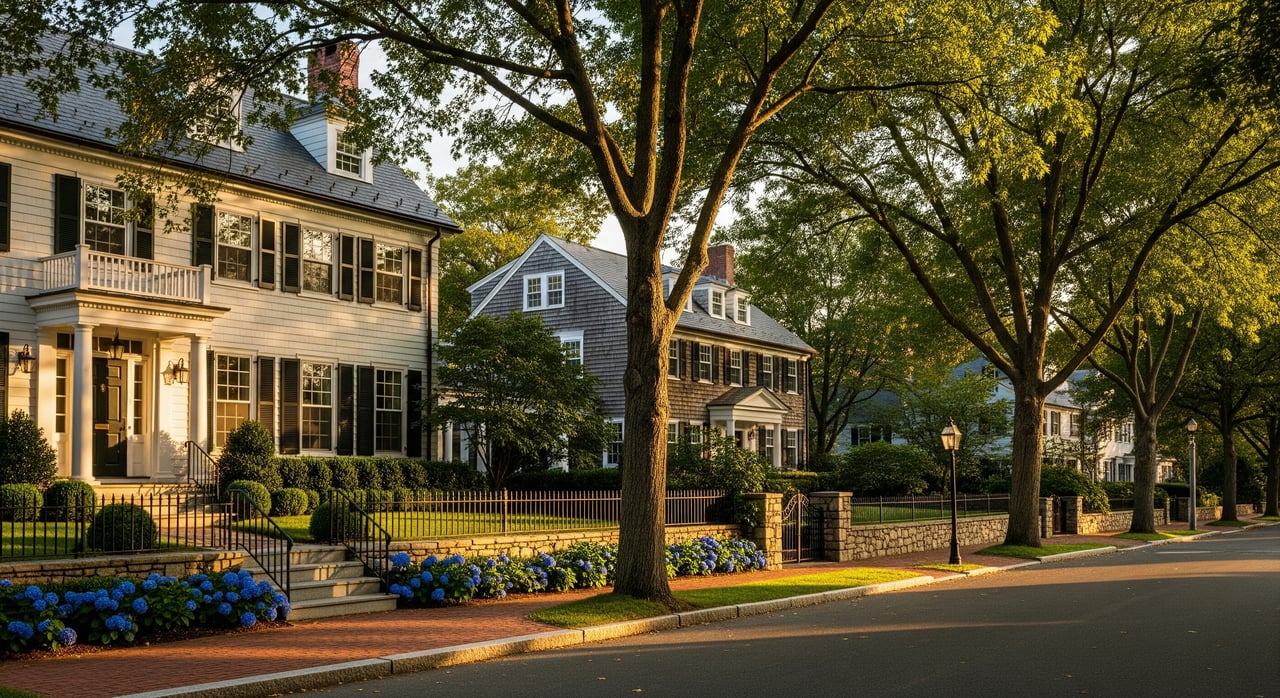
Wellesley Neighborhoods Guide to Square, Hills & Farms
December 4, 2025
December 4, 2025
Thinking about buying in Wellesley but not sure which village fits you best? You are not alone. The town’s three main villages offer distinct vibes, housing choices, and commute tradeoffs. In this guide, you will learn how Wellesley Square, Wellesley Hills, and Wellesley Farms differ, what daily life feels like in each, and how to focus your search with confidence. Let’s dive in.
Wellesley sits west of Boston with direct rail access and quick highway connections. The villages form a simple east–west arc along the MBTA Framingham/Worcester Line:
If you plan to compare commute options, start by checking the MBTA’s Framingham/Worcester Line schedules for each station. You can review current timetables on the MBTA site for the line that serves all three Wellesley stops.
Wellesley Square is the town’s commercial and civic center. You get the most compact, walkable lifestyle here with restaurants, boutiques, the public library, and municipal services clustered around the rail station.
It is lively and pedestrian friendly, with steady foot traffic and easy access to cultural activity. Wellesley College sits nearby and adds events and visual presence to the area.
You will find more condos and townhouses near the center than in other villages. Single-family homes on nearby streets tend to sit on smaller lots, often in older housing stock that may invite thoughtful renovation subject to local zoning.
If you want to walk to coffee, dinner, shops, and the commuter rail, this village is a strong match. It also works well if you prefer lower yard maintenance and a true in-town feel.
The Wellesley Square station connects you to Back Bay and South Station. For real-time schedules and frequency, review the MBTA’s Framingham/Worcester Line timetable.
Wellesley Hills blends residential streets with a smaller village center around the Hills station. It feels suburban yet active, with sidewalks and mature trees.
There are walkable pockets around the station and along nearby streets, plus a useful mix of restaurants and shops. Daily errands feel easy while most blocks retain a quiet, residential character.
You will see the widest variety of housing here: older colonials and Victorians, mid-century Capes and split-levels, and newer rebuilds or large expansions. Lot sizes are typically moderate to large, though pockets vary by block.
Pick the Hills if you want convenience to a neighborhood node and commuter rail while keeping a classic suburban street feel and broader home style choices.
The Wellesley Hills station is on the same Framingham/Worcester Line. Driving access to Route 9 is straightforward, which helps for regional errands and Boston commutes depending on time of day.
Wellesley Farms delivers a quieter, lower-density feel with larger lots and tree-lined streets. The commercial footprint is lighter, which adds to its tucked-away atmosphere.
It reads as more pastoral and private, shaped by the Farms station, nearby conservation land, and access to open space.
Expect more estate-style properties, historic homes, and high-end new construction on larger parcels. Lot sizes are often the most generous in town.
Choose the Farms if you value privacy, landscaped grounds, and a quieter village experience while keeping a workable rail commute.
The Wellesley Farms station offers direct service to Boston on the MBTA Framingham/Worcester Line. The location also gives quick access to I-95/Route 128 for regional travel.
All three villages sit at the higher end of the Greater Boston market. Historically, Wellesley Farms often commands the highest overall prices per property due to larger lots and estate homes. Wellesley Hills spans a wide range based on lot size and level of renovation. Wellesley Square can provide more entry points through condos and townhomes, while in-town single-family homes remain premium.
For current medians, days on market, and active inventory, use real-time MLS data at the moment you are evaluating options. A local agent can deliver an up-to-date, village-by-village snapshot and recent comparable sales so you can calibrate quickly. Inventory can be tight in peak seasons, and well-priced homes often draw competition.
Quick checklist to stay current:
You have three commuter rail stops in town. Trains on the Framingham/Worcester Line serve Wellesley Square, Wellesley Hills, and Wellesley Farms with direct service to Back Bay and South Station. Review live schedules and examples of travel time on the MBTA’s Framingham/Worcester Line timetable.
Driving is straightforward once you learn the corridors. Route 9 crosses southern Wellesley, and I-95/Route 128 clips the town’s edge for regional access. Typical drive times to Boston vary widely by hour and route. For current traffic conditions and road information, check resources from the Massachusetts Department of Transportation.
Parking matters for convenience. Some station lots and downtown areas require permits or offer pay options, and rules can change. Start with the Town of Wellesley’s official site for municipal parking and then confirm details with the MBTA station pages.
You can count on well-kept public spaces and active civic life. Wellesley College contributes performances, lectures, and a distinctive campus presence. Trails, conservation land, and water features like Morses Pond and Lake Waban add easy outdoor options.
Shopping and dining cluster in Wellesley Square, with additional restaurants and services near Wellesley Hills. Wellesley Farms has fewer storefronts, and many residents drive a few minutes to the other villages for daily errands.
Community groups and town committees often weigh in on design, redevelopment, and conservation. If you plan a renovation, it pays to learn the rules early.
Renovation, expansion, and occasional tear-down and rebuild projects are common in Wellesley. Before you budget for changes, review the Town of Wellesley’s zoning and permitting resources and discuss setbacks, lot coverage, historic considerations, and special permits with your agent and a local architect.
Quick due diligence steps:
When you are ready to compare live inventory and recent comps by village, connect with the local team that does this every day. The principals at Beyond Boston Properties can deliver a data-backed snapshot, set up smart tours, and help you secure the right home with confidence.
Stay up to date on the latest real estate trends.
Contact us today to discover how the power of three can elevate your home buying and selling experience in the towns and communities of Greater Boston.