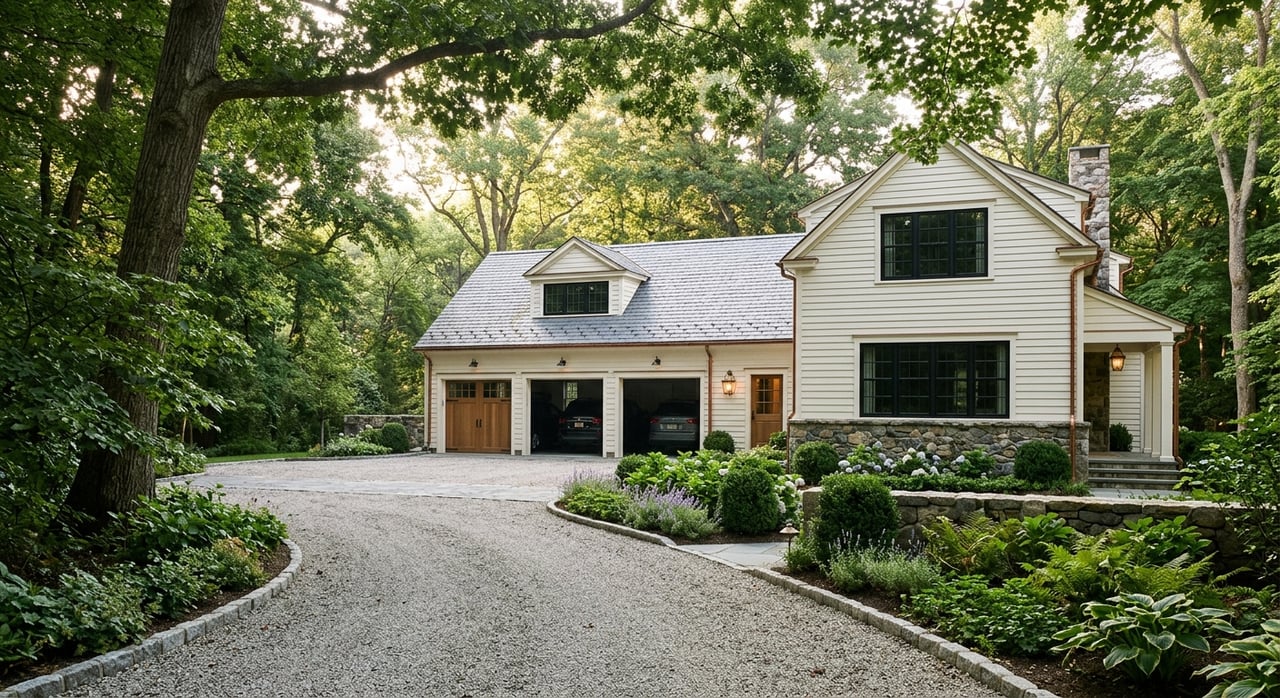
Dover vs Sherborn MA: Which Rural Luxury Town Fits?
May 14, 2026
May 14, 2026
If you want privacy, land, and a true rural feel without giving up access to Boston, Dover and Sherborn are two of the strongest options in MetroWest. But while they often get grouped together, they do not live exactly the same. Your decision usually comes down to how much land you want, how you plan to commute, and what level of carrying costs feels comfortable over time. Let’s dive in.
Dover and Sherborn both offer a semi-rural lifestyle centered on space, conservation land, and single-family homes. Both are part of the Dover-Sherborn Public Schools district, so your choice is less about picking between two different school systems and more about choosing the town character that fits your day-to-day life.
Dover describes itself as predominantly residential and about forty minutes from downtown Boston. The town highlights woods, trails, horseback riding, and access to the Charles River. Sherborn describes itself as a small semi-rural community about 18 miles southwest of Boston, with active farms, orchards, and open space covering more than half its land area.
In simple terms, Dover often feels more like an estate-oriented town with a conservation and recreation focus. Sherborn tends to feel more agricultural and more intentionally rural.
If you picture long driveways, privacy, and a strong conservation mindset, Dover will likely feel familiar right away. The town oversees more than 450 acres of town-owned conservation land, and local resources point riders and outdoor enthusiasts to places like Noanet Woodlands, Wylde Woods, and the Norfolk Hunt Club.
That gives Dover a polished rural feel. You still get space and quiet, but the overall impression is often a little more refined and a little easier to pair with a Boston-facing lifestyle.
Sherborn has a stronger working-land identity. The town highlights active farms, orchards, and a large share of protected open space, and local records note 1,268.58 acres classified as agricultural plus 441.13 acres as open space or recreation.
If your ideal setting is one where open land is part of the town’s core identity, Sherborn may feel like the better fit. Trails for walking or riding add to that land-rich character, but the overall experience is more rural and more car-dependent.
One of the clearest differences between Dover and Sherborn is zoning. This matters because zoning influences how much space surrounds you, what kind of inventory tends to come to market, and how flexible your home search may feel.
Dover’s residential zoning includes districts with minimum lot sizes of 0.5, 1, and 2 acres. Frontage requirements range from 100 to 200 feet, depending on the district.
For you as a buyer, that usually means a wider range of property types. You may still find large estate homes, but you are also more likely to find options that deliver privacy without requiring the biggest parcel sizes.
Sherborn’s Residence A, B, and C districts require minimum lot sizes of 1, 2, and 3 acres. Frontage requirements run from 150 to 250 feet.
Sherborn also has a special-permit subdivision path, but it still preserves the rural pattern. Certain lots must be at least twice the district minimum lot size, with additional conditions such as underground utilities and larger setbacks.
For many buyers, that translates to a stronger surrounded-by-acreage feel. It can also mean fewer choices if you want a smaller estate property or a lower-maintenance setting.
Luxury buyers often focus first on purchase price, but annual carrying costs matter just as much, especially if you plan to stay long term or are balancing lifestyle with budget discipline.
Dover’s FY2026 tax rate is $11.19 per $1,000 of assessed value. The town reports an average single-family residential valuation of $1,720,791 and a median of $1,479,000.
Using the published average-value figure, the implied annual tax bill is about $19,256. On a $1.5 million assessed home, the annual tax would be about $16,785.
Sherborn’s FY2026 tax rate is $15.66 per $1,000. The town’s 2025 annual report lists an average single-family bill of $20,018 on an average value of $1,278,285.
On a $1.5 million assessed home, that works out to about $23,490 per year. Compared with Dover, that is a noticeable difference for buyers comparing similarly priced homes, and it can become even more important on larger estate properties.
A lot of buyers assume Dover and Sherborn offer different school systems, but both towns feed the Dover-Sherborn Public Schools district. District pages list Chickering Elementary in Dover, Pine Hill Elementary in Sherborn, plus the shared Dover-Sherborn Middle School and High School.
That means your choice is usually not about one town having a completely separate district from the other. Instead, it is more about which elementary-school setting, neighborhood feel, and daily routine suit your household best.
Both towns are car-first, but Dover offers a bit more support for buyers who still need regular access to Boston or nearby town centers. The town’s transportation page notes that JFK Transportation provides rides to local destinations and Boston, and Dover’s master plan states that commuter rail is not in town but is available in nearby communities.
That does not make Dover urban or transit-rich. It simply gives you a somewhat more service-oriented setup if your work or lifestyle still pulls you toward the city.
Sherborn’s planning materials are direct about transportation limits. The town states that it has no MBTA service, no private bus service, and no locally based taxi service, while commuter rail is available in neighboring towns.
The road network is centered on Routes 16, 27, and 115, which reinforces the reality of daily driving. If you are comfortable with that tradeoff, Sherborn rewards you with a stronger rural feel.
Dover is often the better match if you want:
For many move-up buyers and relocating professionals, Dover can feel like the middle ground between true rural living and practical convenience.
Sherborn is often the stronger fit if you want:
If your goal is to feel more removed from suburban density, Sherborn often delivers that more clearly.
When you tour Dover and Sherborn, it helps to compare more than the house itself. Two homes at a similar price point can feel very different once you factor in land, taxes, and commute patterns.
As you evaluate options, look closely at:
That side-by-side approach usually makes the choice clearer.
Dover and Sherborn both offer a rare kind of MetroWest luxury: space, privacy, and a landscape-first lifestyle near Boston. The difference is that Dover usually gives you more flexibility, a lower tax rate, and a slightly easier path for commuting, while Sherborn offers a stricter rural standard with larger parcels and a stronger agricultural identity.
If you are deciding between the two, the right answer is less about which town is better and more about which one feels more natural for the way you want to live. If you want expert guidance on comparing homes, land, and long-term value in Dover, Sherborn, and nearby MetroWest communities, connect with Beyond Boston Properties.
Stay up to date on the latest real estate trends.
Contact us today to discover how the power of three can elevate your home buying and selling experience in the towns and communities of Greater Boston.