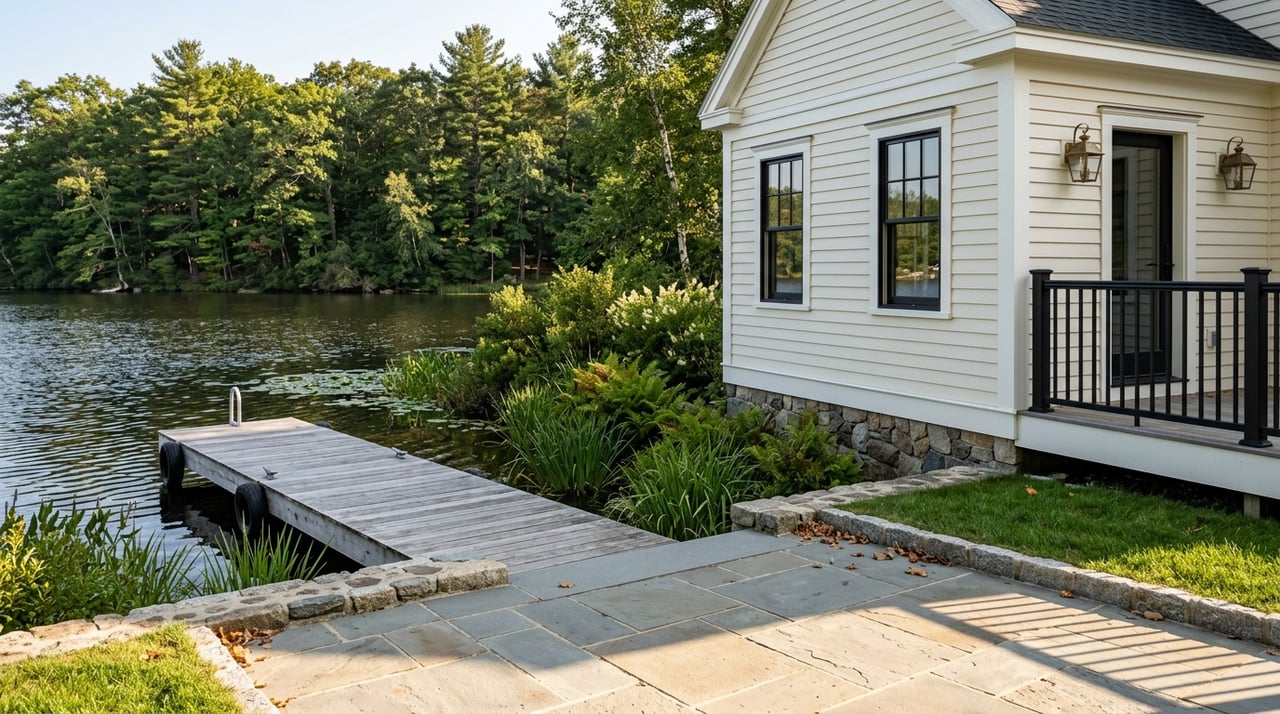
Wayland MA Waterfront Homes, Lakes, And Trail Access
April 16, 2026
April 16, 2026
If you are drawn to Wayland for water views, trail access, and a quieter MetroWest setting, the details matter more than you might think. In this market, "near the water" can mean anything from direct frontage to a public beach nearby, and "close to trails" can mean a short walk to a major conservation area or simply being in a more open part of town. This guide will help you understand how Wayland’s waterfront, trails, infrastructure, and property conditions can shape your home search so you can buy with more confidence. Let’s dive in.
Wayland’s best-known water features include Lake Cochituate and Dudley Pond, but access is not one-size-fits-all. For buyers, that means you should separate the idea of a water view from actual use rights.
According to the town, Wayland Town Beach on North Pond at Lake Cochituate offers a sand beach, ADA-accessible paths and docks, seasonal lifeguards, weekly water-quality testing, a volleyball court, a half basketball court, and boat rentals. That can be a meaningful lifestyle benefit if you want organized public access to the lake without owning direct frontage.
At the same time, the town also notes that Town Beach does not include a public motorized boat ramp. If motorized boating is part of your plan, access is tied to the Department of Conservation and Recreation’s Cochituate State Park and other access points at Middle and South Pond, not simply to being near the beach.
One of the most important buyer takeaways is that access around Lake Cochituate is limited. Wayland’s Open Space and Recreation Plan makes clear that shoreline views and public access are not the same thing.
That distinction matters when you are evaluating listings. A property may offer proximity or a scenic setting without giving you the ability to launch, dock, or swim directly from the lot. Before you make assumptions, verify the exact access type tied to the parcel.
Dudley Pond is another notable water resource in town. Mass.gov describes it as a 91-acre Great Pond on Wayland’s western edge, and the town manages a gravel cartop launch off Dudley Road on the eastern shore.
For buyers who value simple water access, that cartop launch may be more relevant than a broad water view. The town also notes that Dudley Woods Trail includes ADA-accessible walkways and access to Rocky Point on Dudley Pond, which can add to the appeal of nearby homes for buyers who enjoy walking and passive outdoor use.
In Wayland, waterfront can describe several different situations. It may mean direct frontage, nearby beach access, access to a cartop launch, or simply a view of the water from the home or yard.
That is why due diligence is especially important in this part of the market. If a home is marketed for its water setting, you should confirm whether the parcel has legal frontage, whether any launch or docking rights exist, and whether swimming or boating access is public, private, or off-site. The town’s own guidance on Lake Cochituate access supports taking a precise, property-by-property approach.
If you are buying in Wayland for outdoor access, the trail network is a major draw. The Wayland Conservation Commission identifies 19 major conservation areas with trails for hiking and other passive recreation.
These areas include Castle Hill & Trout Brook, Cow Common, Greenways, Heard Farm, Loker, and Mainstone Farm & Reeves Hill, among others. For many buyers, that means trail access is not limited to one corner of town. Instead, it is woven into Wayland’s broader land-use pattern.
Conservation lands are open dawn to dusk, and the town allows activities such as hiking, pet walking, picnicking, snowshoeing, skiing, and small non-motorized boating and fishing. If you have a dog, it is worth noting that dogs must be leashed in parking lots and conservation areas.
There are also added seasonal leash restrictions at Heard Farm and Cow Common from May 1 through July 31, or until the fields are mowed, due to nesting-season protections. These are small details, but they can affect how you use nearby land day to day.
Some of Wayland’s outdoor assets stand out for accessibility and ease of use. Loker is a 59-acre conservation and recreation area with a large parking lot, ball field, ponds, wetlands, ADA-accessible parking, and an approximately 1-mile loop.
Dudley Woods Trail also added more than a quarter-mile of ADA-accessible walkways, benches, and trail signage in 2019. For buyers comparing locations within town, nearby access to these spaces can offer a practical quality-of-life benefit that goes beyond simple lot size.
Wayland’s trail system also connects to larger regional networks. The town’s Open Space and Recreation Plan says local trails are part of the Bay Circuit system.
The Mass Central Rail Trail Wayside also passes through Wayland. The plan notes parking at the Wayland Library off Route 126, while the Wayland-to-Sudbury segment was still in design as of the February 2026 update. If regional walking or biking access matters to you, this is another good point to verify as you narrow your search.
Wayland describes itself as a semi-rural MetroWest community about 18 miles from Boston with access to Route 128 and the Massachusetts Turnpike. The town also notes that it has two public golf courses, Wayland Country Club and Sandy Burr Country Club, both on Route 27, according to its town overview.
From a buyer’s perspective, the feel of the housing stock can shift depending on where you focus. Areas near water, conservation edges, and larger undeveloped land tend to read as more low-density, while the Route 20 and Town Center corridor ties more directly into utility and infrastructure improvements.
Wayland’s 2024 annual report says the wastewater district serves business, residential, and municipal properties along Route 20 from Route 27 to Town Center and Oxbow Wayland. The same report notes water-line upgrades along the Route 20 Wayland Center corridor and a wastewater connection from River’s Edge to Town Center.
That infrastructure context matters because Wayland does not have a town-wide public sewer system. Based on the town’s planning documents, buyers looking for lower-maintenance or more utility-served housing may spend more time evaluating the Route 20 and Town Center corridor, while buyers prioritizing a more open setting may focus on other parts of town.
For many Wayland homes, septic is not a side note. The town’s Housing Production Plan explains that the lack of town-wide sewer has encouraged larger lots and lower-density development patterns.
That makes septic review a core part of due diligence for many purchases outside the sewered corridor. The town’s Health Department septic and Title 5 page is a useful reminder that system age, inspection history, replacement planning, and local permit requirements all deserve close review.
If you are considering a home outside the Route 20 sewered area, build these questions into your process early:
In Wayland, these are not niche questions. They are often central to understanding the true cost and flexibility of a property.
Buying near open space or water can bring unique benefits, but it also comes with an added stewardship mindset. Wayland’s FY2026 tax information lists a property tax rate of $14.83 per $1,000 of assessed value and an average single-family tax bill of about $18,259.
The same source notes a 1.5% Community Preservation Act surcharge, which supports open space, affordable housing, historic resources, and recreation. For some buyers, that helps explain how the town continues to invest in the environmental and recreational assets that shape Wayland’s appeal.
For buyers near lakes, ponds, or the river, local oversight is also part of the picture. The town’s Surface Water Quality Committee oversees Dudley Pond, Heard Pond, North Pond, Mill Pond, the Sudbury River, and other impaired waters.
That means water quality, invasive vegetation, and maintenance are active local issues. If you are buying for a water-oriented lifestyle, it is smart to view stewardship and regulation as part of ownership, not as background detail.
If you are comparing homes in Wayland, especially near water or conservation land, it helps to look beyond the photos and ask practical questions early.
Here is a simple checklist:
In a town like Wayland, these details often shape how well a home fits your lifestyle long after closing.
If you are considering a move in Wayland or another MetroWest community, Beyond Boston Properties can help you evaluate not just the home, but the setting, access, and long-term fit behind it.
Stay up to date on the latest real estate trends.
Contact us today to discover how the power of three can elevate your home buying and selling experience in the towns and communities of Greater Boston.